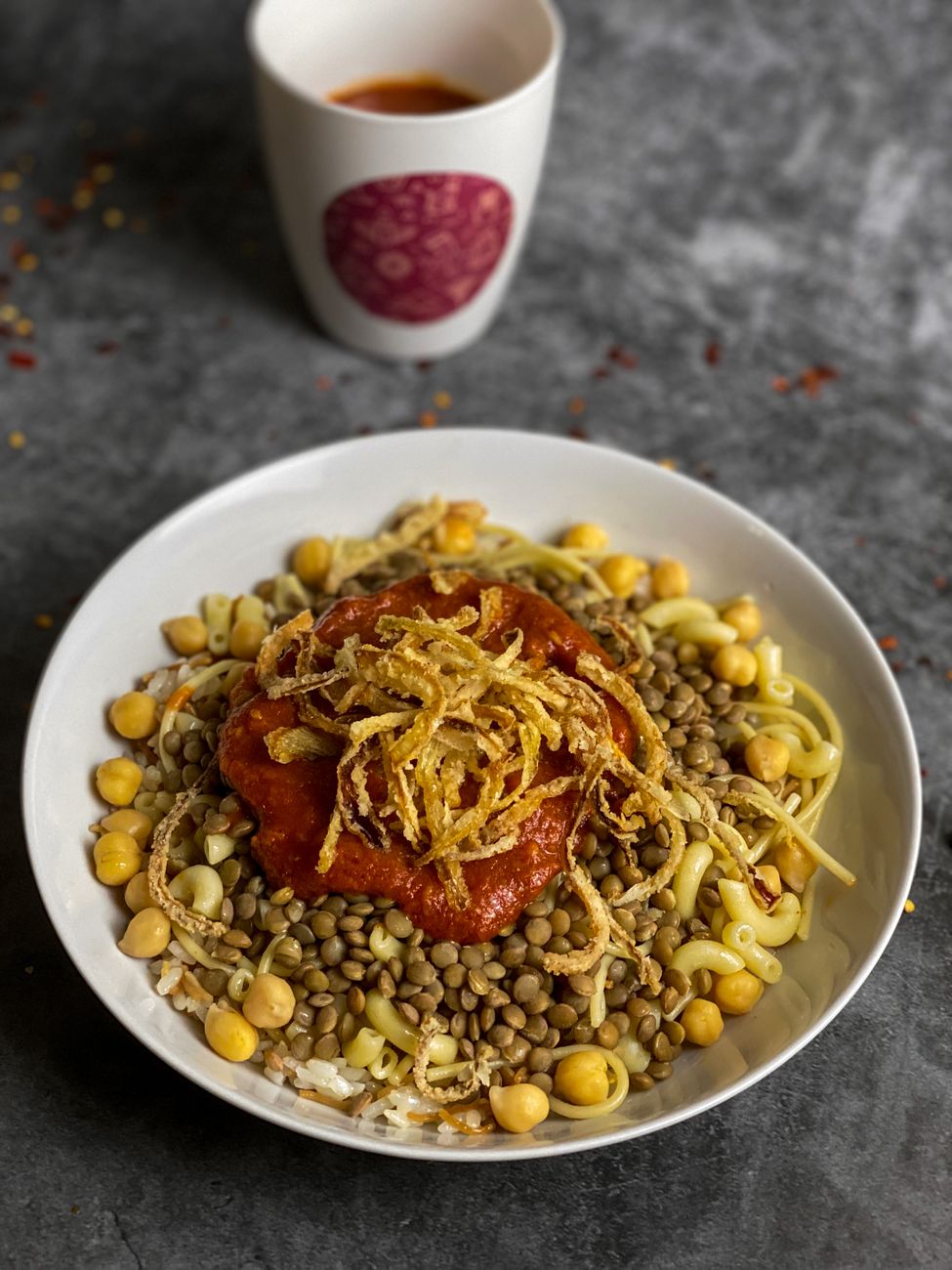
Carbs, Chaos, and Comfort: Why Koshary is Egypt’s Ultimate Street Food
If you walk down any busy street in Cairo, the first thing that catches your attention isn't the chaotic traffic—it’s a rhythmic, metal-on-metal clatter echoing from wide open storefronts. That is the sound of a Koshary master clinking a heavy spoon against stainless steel bowls, assembling Egypt's most legendary, carb-heavy street food.
Koshary (also spelled kushari or koshari) is Egypt's official national dish. On paper, the concept sounds like a chaotic kitchen experiment: a piled-high mountain of rice, macaroni, brown lentils, and vermicelli noodles. But once you spoon over the warm spiced tomato sauce, splash it with garlicky vinegar, and top it with crispy fried onions, it transforms into pure comfort food magic.

What’s Inside the Bowl?
The brilliance of Koshary lies in its layered textures and customizability. It's a completely plant-based, naturally vegan meal that feeds everyone—from students to CEOs.
The Carbohydrate Base: Fluffy Egyptian white rice mixed with toasted vermicelli noodles, short macaroni, and tender brown lentils.
The Toppings: Plump chickpeas and a generous handful of warda ("roses")—the sweet, ultra-crispy deep-fried onions scattered on top.
The Sauce Trio:
A warm, rich tomato sauce spiked with cumin and coriander.
Da'ah: A zesty, tangy garlic-and-vinegar liquid poured over to cut through the heavy grains.
Shatta: A fiery chili sauce added drop by drop to hit your exact spice tolerance.
How to Eat Koshary Like a Cairo Local
Don't leave it layered. When the bowl arrives, it looks pretty, but you need to mix it.
Douse it with Da'ah. Pour the garlic vinegar sauce generously over the top.
Add the Shatta carefully. Test the hot sauce first—it packs serious heat!
Stir aggressively. Mix all the layers until every grain of rice and strand of pasta is coated in red sauce, vinegar, and crunchy onions.
Whether you get it served in a metal bowl at Cairo's famous Abou Tarek or packed into a plastic bag to go, Koshary isn't just a meal—it’s the delicious, buzzing heartbeat of Egyptian street culture.


