The Majesty of the Desert
In the Saudi desert, a meal isn't just food—it’s a grand diplomatic gesture. If you aren't greeted with the scent of cardamom and the sight of a platter the size of a shield, have you truly experienced Saudi hospitality?
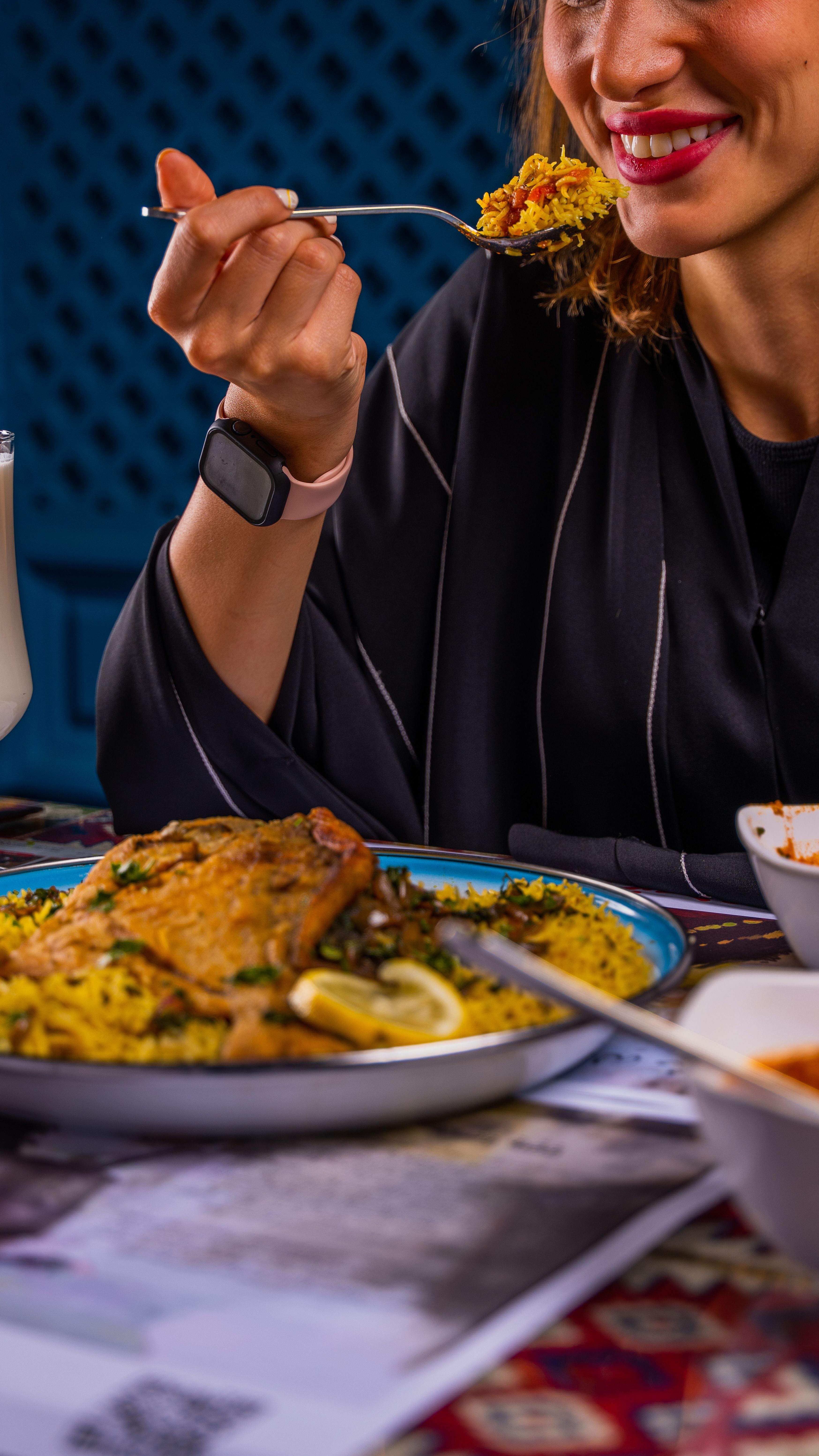
The Saudi kitchen is defined by the vastness of its landscape—from the cooling, terraced mountains of Asir in the south to the sun-baked, golden heart of the Najd desert. It is a cuisine of patience, where grains are slow-simmered for hours, and aromatic spices are toasted to perfection to honor the arrival of a guest.
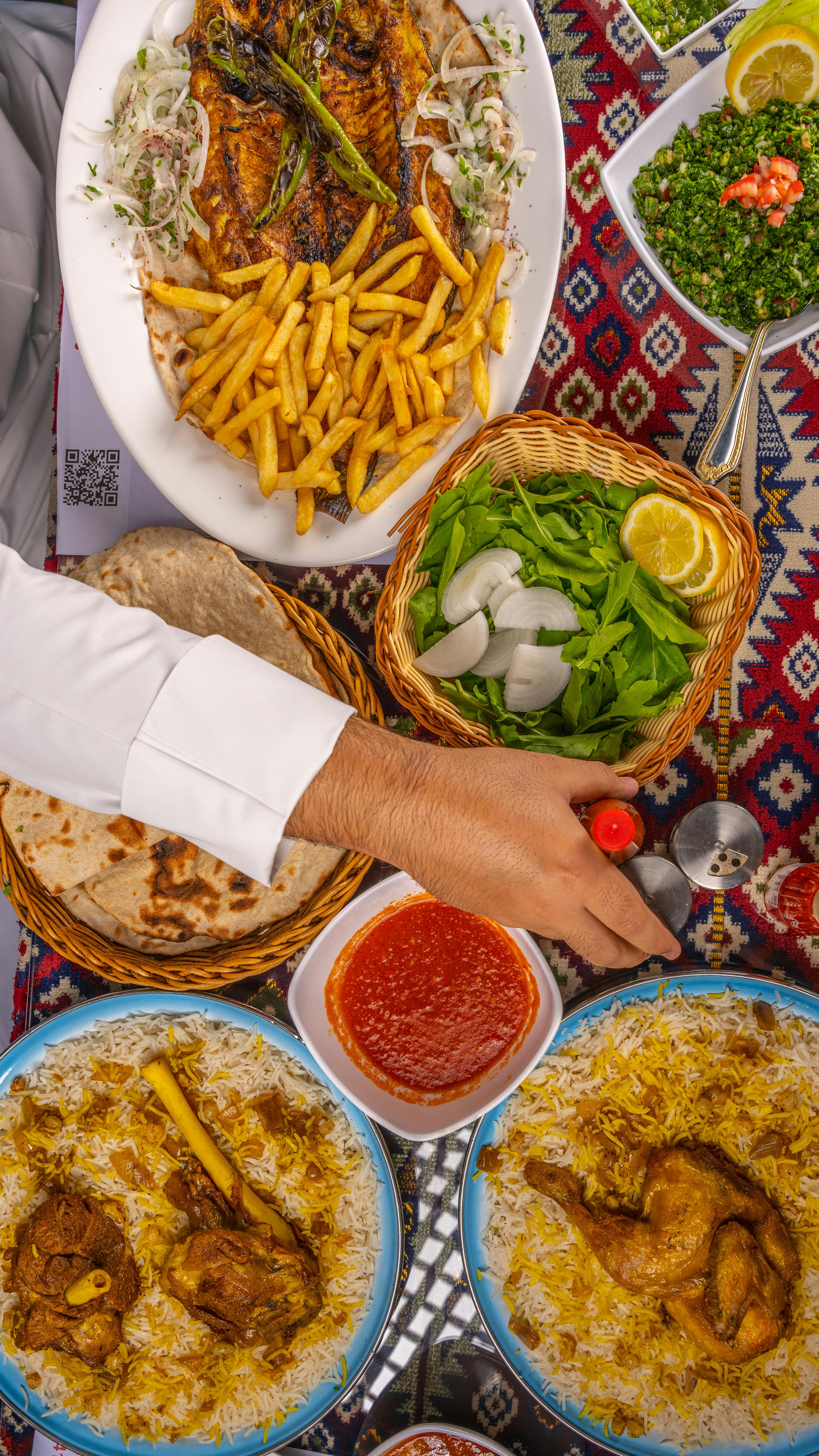
The Pillars of the Saudi Feast

Kabsa: The National Masterpiece
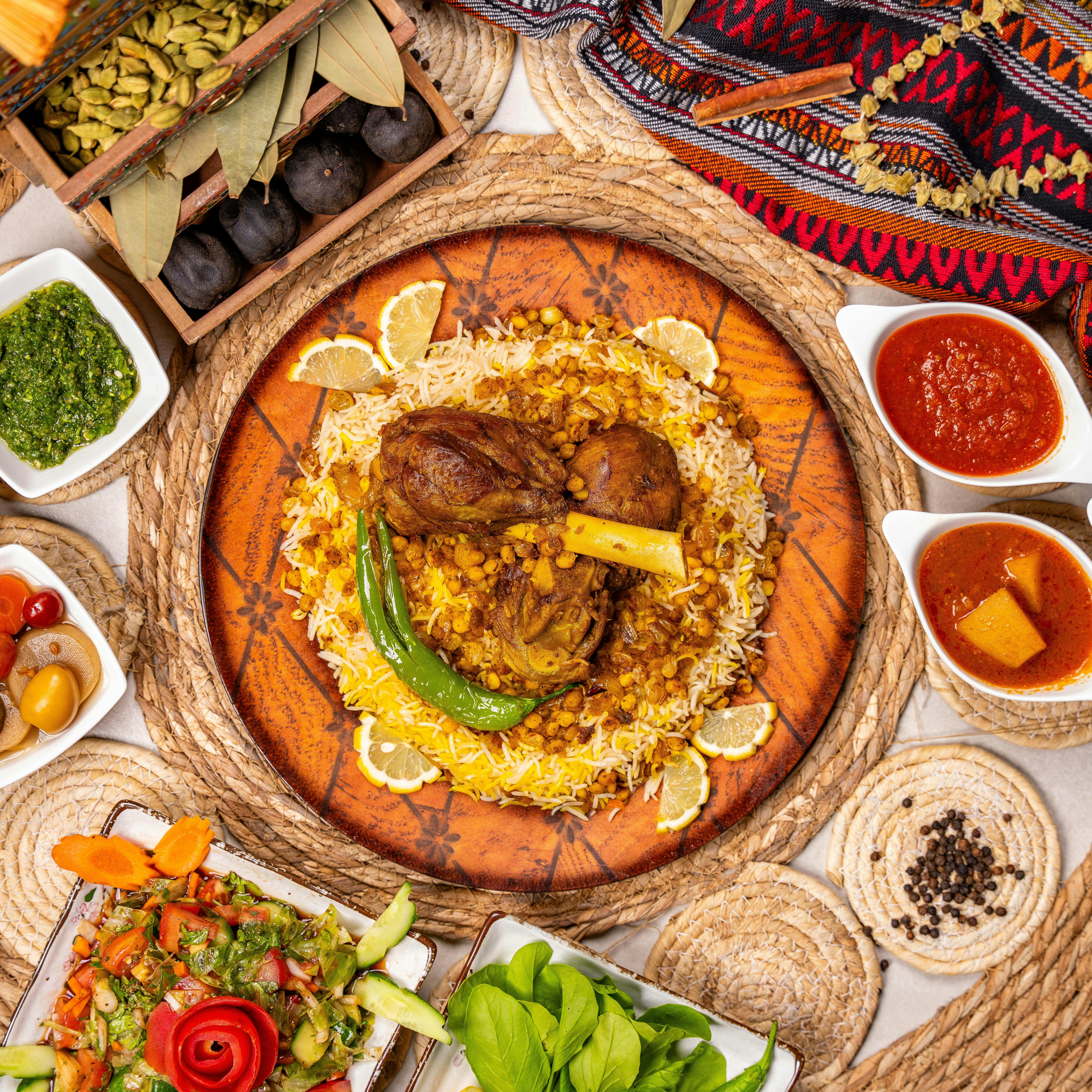
Kabsa is the undisputed king of the table. While every household has its own variation, the "national" soul of the dish remains consistent.
The Secret: Its unique depth comes from Loomi (dried black lime), which provides a smoky, fermented citrus punch that cuts through the richness of the meat.
The Spice Alchemy: The rice is infused with the "Bezar" spice blend—a complex harmony of cinnamon, cloves, black pepper, and coriander that turns the grains into a fragrant, golden canvas.
The Presentation: It is often topped with a vibrant mosaic of toasted almonds, pine nuts, and plump raisins, signifying wealth and abundance.
Jareesh: The Heritage Grain
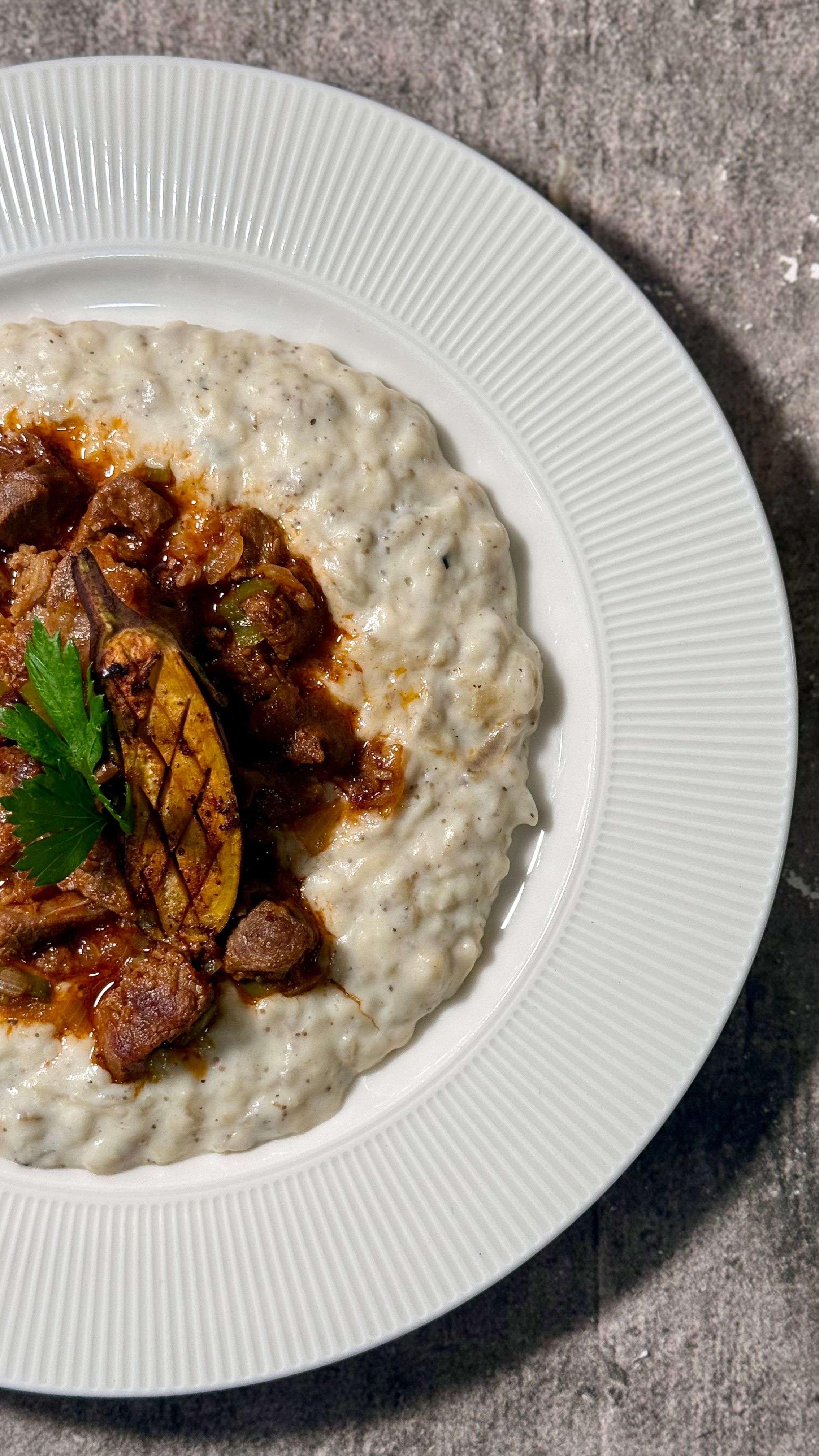
Considered the "mother of all dishes," Jareesh is a window into the Kingdom’s ancient nomadic roots.
The Texture: This is a labor of love made from cracked wheat, slow-cooked with yogurt or laban until it reaches a velvety, porridge-like consistency.
The Finish: It is served with a "Masli" topping—a rich crown of onions caramelized to a deep mahogany and a generous pool of melted ghee, providing a savory, buttery finish that warms the soul.
The Coffee Ritual: A Prelude to Peace
Every meal begins long before the food is served with Gahwa (Saudi coffee).
The Profile: Unlike Western coffee, Gahwa is light, yellowish-green, and translucent. It is brewed with crushed cardamom and often a pinch of saffron.
The Balance: It is never served with sugar. Instead, the bitterness is perfectly balanced by the natural, honey-like sweetness of accompanying dates, such as the soft Sukkari or the firm Khalas.
The Etiquette: The host pours with the left hand and offers the cup with the right, filling it only one-third of the way—a signal that the guest is welcome to stay and refill their cup indefinitely.
The Ritual: The Spirit of the Sufra
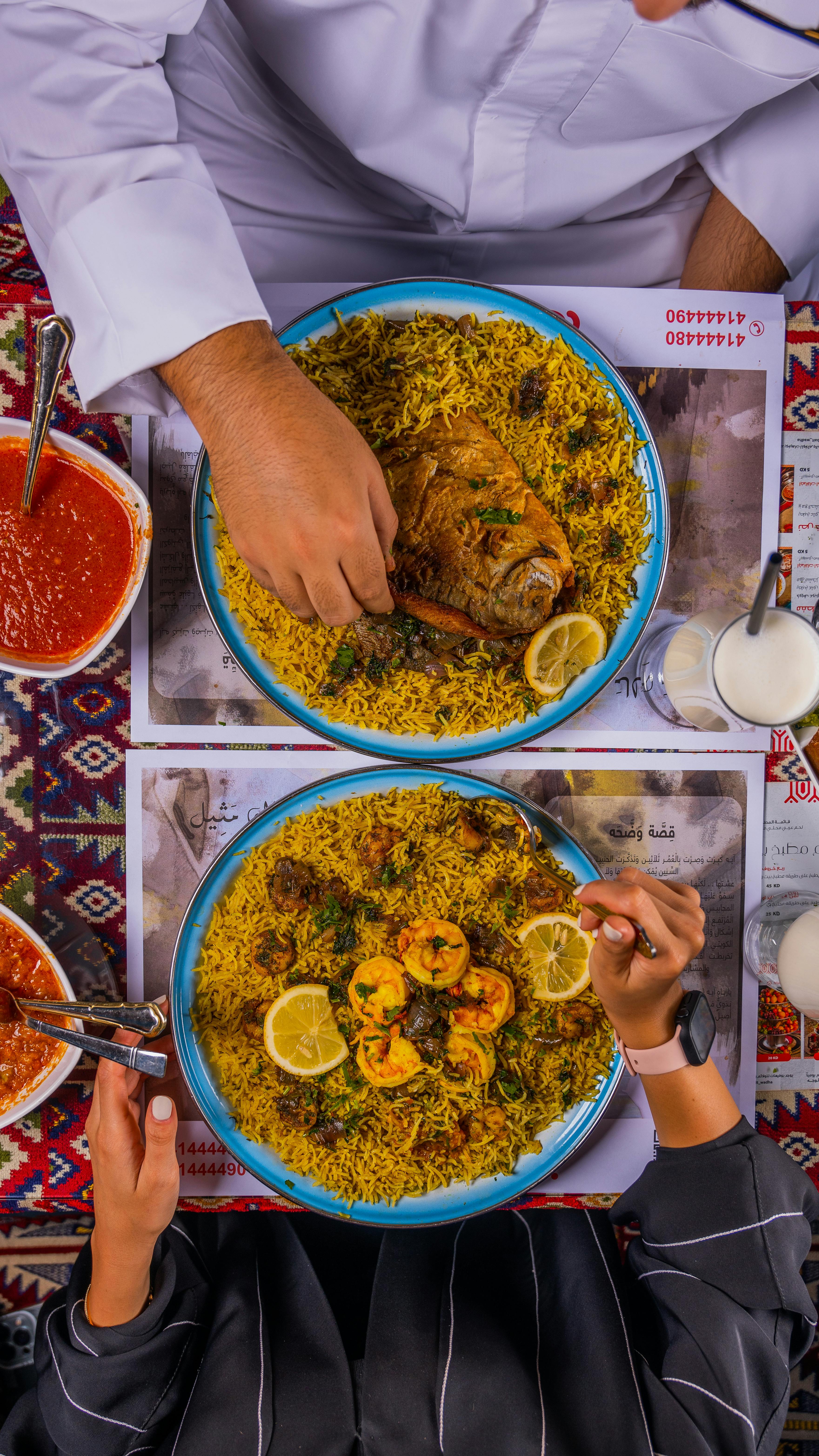
In the Saudi home, eating is a profound communal act. The meal is usually shared on a Sufra (a large floor mat), bringing everyone closer to the earth and to one another.
Sitting on the floor removes the barriers of status and hierarchy; it is a physical reminder that everyone at the table—from the traveler to the head of the house—is an equal brother or sister. To eat from the same giant platter is to share a bond of "Salt and Bread," a Middle Eastern concept of lifelong loyalty and friendship forged through the act of sharing a meal