Fruits You Probably Haven't Tried Yet
1. Rambutan: A Hairy Little Surprise
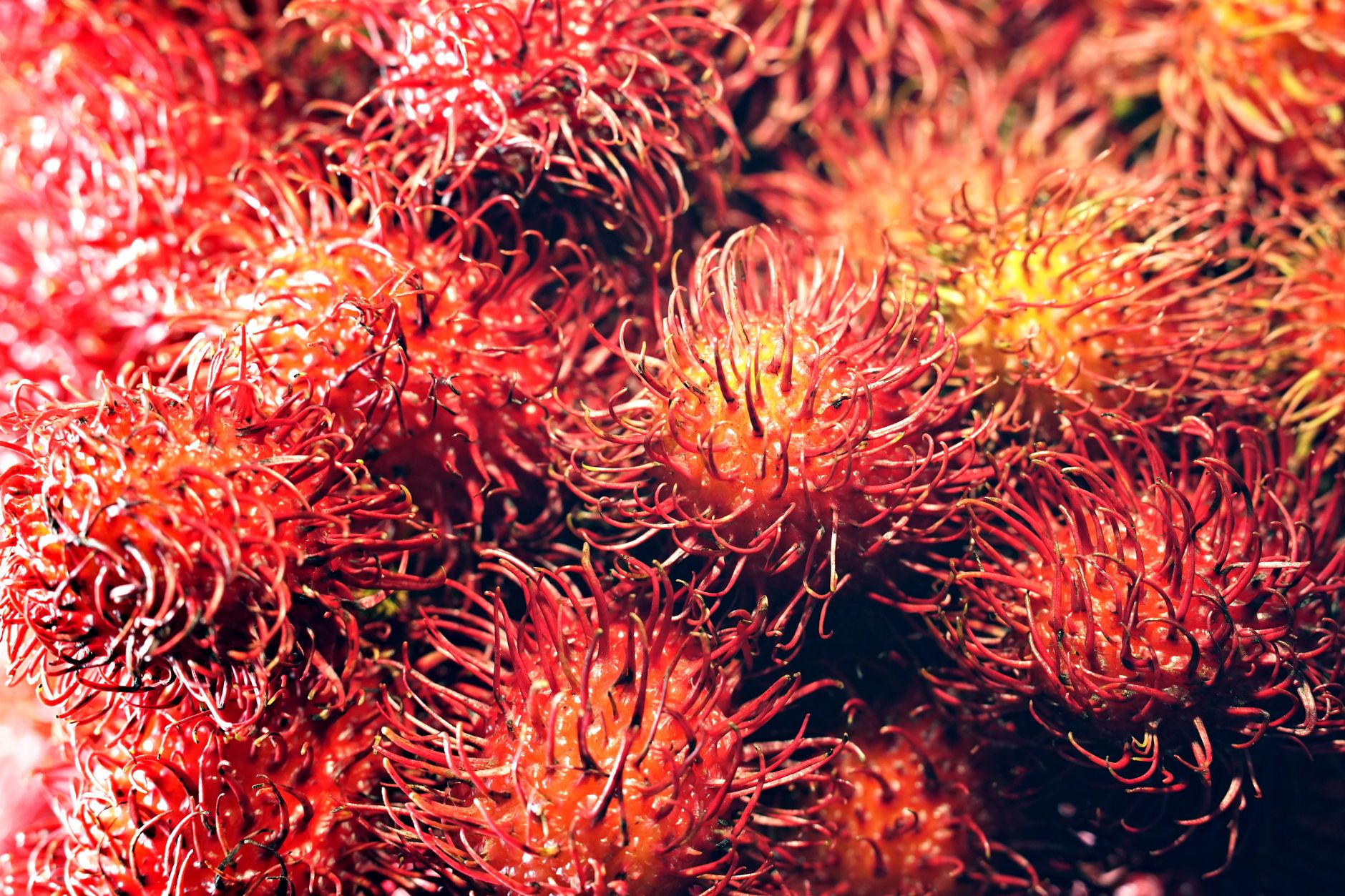
At first glance, rambutan might be one of the strangest-looking fruits you will come across. Its bright red or yellow skin is covered in soft, hair-like strands, making it look almost like a tiny sea creature. But once you peel it open, you will find a smooth, translucent white fruit inside.
Originally from Southeast Asia, rambutan has a sweet and juicy flavour, often compared to lychee. Its texture is soft and slightly firm, making it refreshing to eat, especially when chilled. Despite its unusual appearance, it is surprisingly easy to enjoy. Just remove the skin, eat the flesh and avoid the seed in the centre.
2. Mangosteen: The Queen of Tropical Fruits
Often called the queen of fruits, mangosteen is known for its deep purple shell and delicate white flesh. Opening one feels a little like discovering a hidden treat, as the outside gives very little away about what is waiting inside.
The fruit has several soft white segments, with a sweet and slightly tangy taste that many people find refreshing. Some describe it as a mix of peach, citrus and strawberry, although its flavour is quite unique.
Mangosteen is especially popular in Southeast Asia, where it is enjoyed fresh and sometimes used in juices and desserts. It is a good example of how the most beautiful surprises are not always the ones that look familiar.

3. Dragon Fruit: Colourful Inside and Out
Dragon fruit is probably one of the most recognisable fruits on this list, but that does not make it any less interesting. With its bright pink or yellow skin and green-tipped scales, it looks almost too colourful to be real.
Cut it open and you will usually find white or deep magenta flesh dotted with tiny black seeds. Its flavour is mild and lightly sweet, with a refreshing texture that makes it perfect for fruit bowls, smoothies and desserts.
Native to the Americas but now widely grown across tropical and subtropical regions, dragon fruit has become a familiar sight in many cafés and supermarkets. It is also a favourite for food presentation, thanks to its naturally striking colours.

4. Jackfruit: The Giant of the Fruit World
If there is one fruit that can make you stop and stare, it is jackfruit. Growing directly from the trunk and branches of its tree, it can become enormous, sometimes weighing more than 30 kilograms.
Inside its thick, bumpy green or yellow exterior are individual pods of golden flesh. When ripe, jackfruit has a sweet flavour that is often compared to a combination of banana, pineapple and mango. It is commonly eaten fresh or added to desserts across South and Southeast Asia.
But here is something that makes jackfruit particularly interesting: when it is still unripe, its texture is quite different. It becomes soft and slightly stringy when cooked, allowing it to absorb flavours from sauces and spices. That is why it is sometimes used as a plant-based alternative in savoury dishes.

5. Passion Fruit: A Little Fruit with a Big Personality
Passion fruit may be small, but its flavour is anything but subtle. Its wrinkled purple or yellow shell hides a bright, juicy centre filled with seeds surrounded by fragrant pulp.
The taste is sweet, sharp and intensely tropical, with a distinctive tang that makes it popular in juices, desserts, sauces and even savoury dishes. It is also one of those fruits that can completely change a recipe with just a spoonful.
Originally native to South America, passion fruit is now grown in many warm regions around the world. If you have ever tried a passion fruit drink or cheesecake, you already know how much flavour can fit inside such a small fruit.

6. Salak: The Snake Fruit
With reddish-brown skin that resembles snake scales, salak has earned itself the nickname "snake fruit". Native to Indonesia, it grows in clusters at the base of a palm tree and has a crisp, pale interior.
Peeling it reveals several sections of firm flesh, with a texture that is often compared to an apple. Its flavour can vary depending on the variety, ranging from sweet and slightly acidic to a little dry and tangy.
Salak is commonly enjoyed fresh in Indonesia, but it can also be pickled, preserved or used in local sweets. Its unusual appearance might take a moment to get used to, but that is part of the fun of discovering something new.

7. Kiwano: The Horned Melon
If you thought dragon fruit looked unusual, wait until you see kiwano. Also known as the horned melon, this fruit has bright orange skin covered in small spikes. Inside, its flesh is a vivid green, jelly-like mixture filled with edible seeds.
Originally from Africa, kiwano has a mild flavour that is often compared to cucumber, banana and lime. It is refreshing rather than overly sweet, which makes it an interesting addition to fruit salads, drinks and creative dishes.
Its appearance makes it particularly eye-catching when served at the table. In fact, cutting one open is almost an experience in itself, especially if you have never seen its bright green interior before.


A World of Flavours Waiting to Be Discovered
One of the best things about food is that there is always something new to try. A fruit you have never heard of might become your next favourite, while another might surprise you with a flavour or texture you never expected.
These fruits are a reminder that familiar ingredients are only a small part of what the world has to offer. Different climates, cultures and growing traditions have given us an incredible variety of flavours, many of which are still waiting to be discovered.
So, the next time you come across an unfamiliar fruit at a market, supermarket or restaurant, why not give it a chance? You might find yourself reaching for something a little more adventurous than your usual banana or apple.