Is Social Media Making Us Hungry?
The Science Behind Food Videos, Viral Cravings, and Why We Can't Stop Watching
You're scrolling through Instagram, minding your own business.
Suddenly, a video appears.
A perfectly melted cheese pull. A burger dripping with sauce. A spoon breaking into a warm chocolate cake.
You weren't hungry five seconds ago.
But now? You're seriously considering ordering food.
Sound familiar?
Welcome to the world of food content, where a 15-second video can make you crave something you've never even tasted.
From TikTok food trends to Instagram restaurant reels, social media has completely changed how we discover, desire, and experience food.
But here's the big question:
Is social media actually making us hungry, or is it simply making food impossible to ignore?
Let's explore the fascinating science behind food videos, digital cravings, and the power of seeing something delicious on your screen.

Why Do Food Videos Make Us Feel Hungry?
Think about the last food video that made you stop scrolling.
Maybe it was a freshly baked pizza coming out of the oven.
Or a creamy pasta dish being mixed with parmesan cheese.
Whatever it was, chances are you could almost imagine how it tasted.
That's because our brains don't respond to food only when we're eating it.
They also respond when we see it.
Images of appetizing food can activate brain regions involved in attention, motivation, and reward. For some people, these visual cues can increase the desire to eat, even when they weren't thinking about food before.
And social media makes those cues incredibly easy to encounter.
Instead of seeing one tempting dish, you might scroll past twenty in just a few minutes.
The result? Your eyes are enjoying a food festival, and your brain wants an invitation.

The Science Behind Visual Hunger
There's a fascinating concept called visual hunger.
It describes the desire to look at images of food and the appetite-related responses those images can sometimes trigger.
Our brains have evolved to pay attention to food because finding enough to eat is essential for survival.
Today, however, food is everywhere on our screens.
A beautifully photographed dessert, a colorful sushi platter, or a close-up of crispy fried chicken can capture our attention almost instantly.
Research suggests that viewing appealing food images can influence brain activity related to reward and appetite.
But that doesn't mean every food photo will make everyone hungry.
Your current hunger level, preferences, memories, and even your mood can affect how strongly you respond.
So when a food reel makes your mouth water, it's not necessarily a lack of willpower. It's your brain responding to a powerful visual cue.
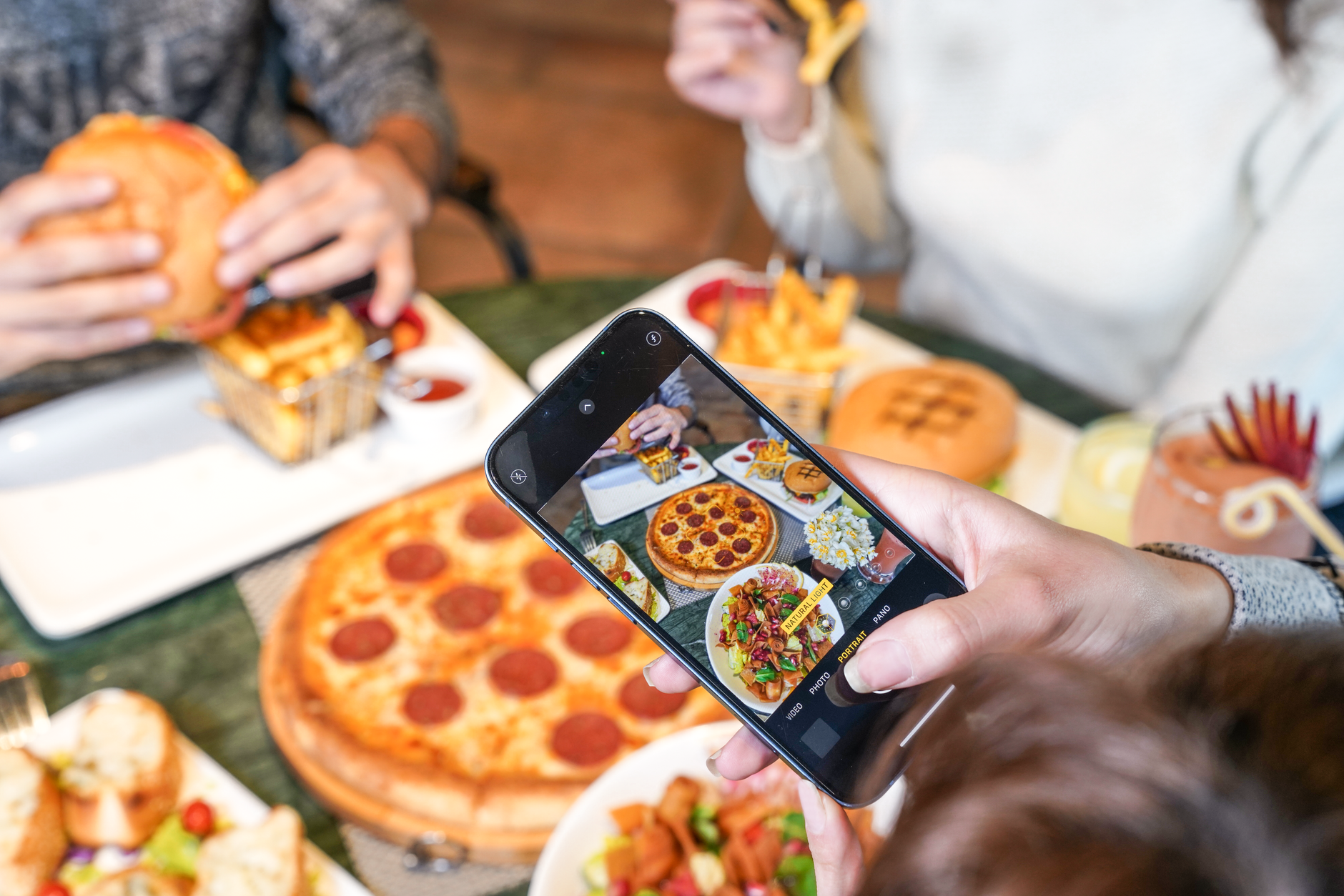
Why Cheese Pulls and Crunchy Food Videos Go Viral
There's something incredibly satisfying about watching cheese stretch from a pizza.
Or hearing the first crunch of perfectly fried chicken.
Or seeing chocolate slowly poured over a dessert.
These videos are designed around sensory appeal.
Even though we can't physically taste or smell food through our phones, visual details and sound can help us imagine the experience.
Close-up shots highlight textures. Slow motion makes melted cheese look irresistible. Crisp audio emphasizes every bite.
Some videos also use ASMR-style sounds to make the eating experience feel more immersive.
And because these moments are visually dramatic, they're easy to watch, share, and remember.
But there's another reason they spread so quickly.
Social media platforms can recommend similar content based on what people watch and engage with.
So if you love watching pizza videos, you may start seeing even more pizza videos.
One cheese pull can turn into an entire evening of food content

Can You Crave Food Without Being Hungry
Here's something interesting.
Hunger and cravings aren't exactly the same thing.
Physical hunger is your body's signal that it needs energy.
A craving, on the other hand, is a strong desire for a particular food.
You can experience one without necessarily experiencing the other.
For example, you might finish a satisfying dinner and still want chocolate after seeing a beautiful dessert video.
That doesn't automatically mean your body needs more food.
The image may have triggered a memory, an expectation of pleasure, or a desire for a familiar flavor.
Our brains learn to associate certain foods with enjoyable experiences.
And those associations can be activated by something as simple as a photograph.
That's why seeing your favorite burger online can suddenly make it feel like the only thing you want to eat.
Sometimes, you're not hungry for food. You're craving a specific experience.

How TikTok and Instagram Influence What We Eat
Remember when discovering a restaurant meant asking a friend for recommendations?
Today, a single viral video can introduce thousands of people to a dish they've never heard of.
Think about the food trends that have dominated social media:
Dubai chocolate bars.
Cloud bread.
Baked feta pasta.
Oversized cookies.
Creative matcha drinks.
Many of these foods became widely discussed because people saw them online, watched others try them, and wanted to experience them for themselves.
Social media influences food discovery through several powerful mechanisms.
First, repetition makes unfamiliar foods feel more recognizable.
Second, seeing other people enjoy something can create social proof — the feeling that a product or experience might be worth trying because others are enthusiastic about it.
Third, visually appealing content can spark curiosity.
And finally, the fear of missing out can make limited-time food trends feel especially exciting.
Sometimes, we don't just want to taste the food. We want to be part of the conversation around it.

Is Watching Food Content Actually a Bad Thing?
Not necessarily.
Food content can be entertaining, inspiring, and even educational.
It helps people discover new cuisines, learn recipes, explore restaurants, and connect with others who share their passion for food.
Watching a cooking video might inspire you to prepare a homemade meal.
Seeing a traditional dish might encourage you to learn about another culture.
And discovering a small local restaurant online might introduce you to a place you would otherwise never find.
However, constantly viewing highly tempting food content may influence cravings or eating decisions for some people.
It can also create unrealistic expectations when food is heavily styled, edited, or presented as perfect.
The important thing is to recognize the difference between enjoying food content and feeling pressured to try everything you see.
You don't have to order every viral dessert.
And you don't have to visit every restaurant trending on TikTok.
Sometimes, watching delicious food is simply another way to enjoy it.

Final Bite: Is Social Media Really Making Us Hungry?
The answer is: sometimes, yes.
Social media can influence our appetite, cravings, and food choices by surrounding us with appealing visual cues.
But the story doesn't end there.
Food content can also inspire curiosity, introduce us to new cultures, and help us discover restaurants worth visiting.
The key is understanding how what we see online influences what we want to eat.
So the next time a delicious food video makes you stop scrolling, ask yourself:
Am I actually hungry, or did that cheese pull just convince me I am?
Either way, there's a whole world of flavors waiting to be explored.
Discover new restaurants, share your favorite food moments, and connect with fellow food lovers on Pleny — where food discovery goes beyond the screen.