The Chefs Who Refused to Pick a Cuisine
No rules. No borders. No labels. Welcome to the most exciting thing happening in Dubai's food scene right now.
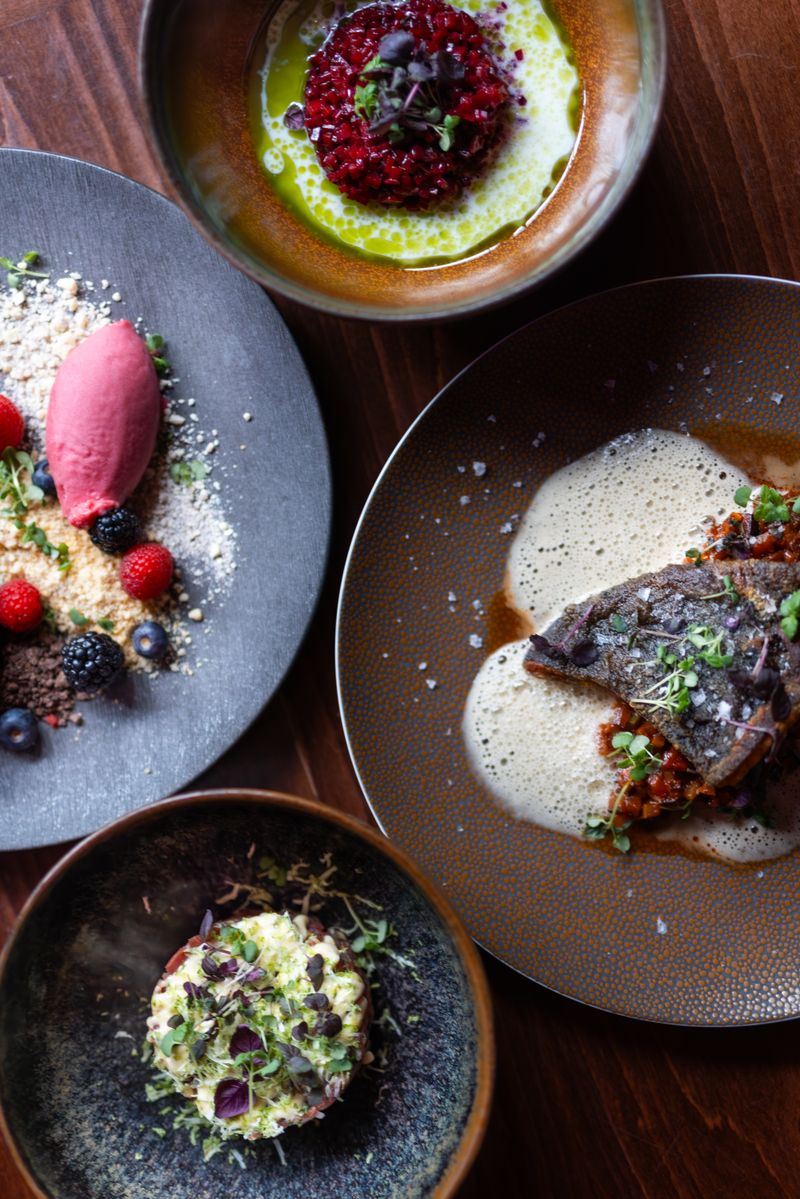
Picture this: a bowl of miso-braised lamb ouzi lands in front of you. The meat is Japanese in technique, low, slow, umami-deep. But the spice blend is unmistakably Levantine. The garnish? A drizzle of tahini and a scattering of crispy shallots that belong to neither tradition and somehow to both.
You take a bite. Your brain spends three seconds trying to categorise it. Then it gives up, and you just enjoy it.
This is cuisineless dining. And it's quietly becoming one of the most exciting movements in Dubai's restaurant scene.
The concept is exactly what it sounds like: chefs who cook without borders. No fixed cuisine, no geographical loyalty, no obligation to stay in one lane. Just ingredients, techniques, and instincts from wherever they choose, combined in ways that make you forget to ask where the dish is "from."
The best dish you'll eat this year probably doesn't have a nationality. And that's exactly the point.
Dubai has always been uniquely positioned for this. A city built on convergence, where over 200 nationalities live, eat, and cook side by side, it was only a matter of time before its chefs stopped treating their different influences as separate ingredients and started blending them entirely.
What's changing now is the intentionality. This isn't fusion for the sake of novelty. It's chefs actively rejecting the idea that a dish needs to belong somewhere, and building menus that reflect their actual lives, their actual palates, their actual mix of influences. A Lebanese chef who grew up eating maki in São Paulo. An Egyptian cook trained in Copenhagen who misses ful medames. A Filipina pastry chef in Dubai who puts pandan in her knafeh because it made sense to her and she didn't ask anyone's permission.
The results are dishes that couldn't exist anywhere else, and that's the whole point.
Shawarma Ramen Levantine spiced meat · Japanese broth · toum tare · pickled turnip
Kibbeh Gyoza Spiced lamb filling · pine nuts · Japanese wrapper · pomegranate dip
Umm Ali Crème Brûlée Egyptian pastry base · French technique · rose water · caramelised top
Za'atar Tacos Palestinian spice blend · labneh · corn tortilla · sumac onions
Critics of the trend will tell you that cuisineless dining risks erasing culinary identity, that when everything is everything, nothing means anything. It's a fair concern. Food is culture, and culture deserves to be protected.
But here's the counterpoint:
cuisine has always been in motion.
The tomato in Italian food came from the Americas. The chilli in Yemeni cooking came from India via Portugal. The Arabic coffee ritual that feels ancient was shaped by centuries of trade routes. Every cuisine we call "traditional" is the result of someone, somewhere, mixing what they knew with something new.
What cuisineless dining does isn't erase tradition. It continues it, just faster, and with more passports.
And for food lovers in the UAE, it means the dining scene has never been more worth exploring. Because the most interesting dish on any menu right now might be the one that defies every category you know, and tastes completely, unmistakably, like Dubai.
The Pleny angle: When a dish doesn't have a category, the only way to understand it is through the people who've actually eaten it. That's why community-driven discovery matters more than ever, no algorithm knows how to sort "miso ouzi," but a foodie who's tried it absolutely does.
Discover Dubai's most borderless dishes.
Join Pleny — the Middle East's first social food network.
Find the dishes that don't fit any category, share your own, and be part of the community defining what UAE food looks like next.