The Science and Soul of Comfort Food: Why We Crave What We Crave
We have all been there. After an exhausting day, a disappointing setback, or a bout of rainy weather, our brains don't usually scream out for a crisp kale salad or a perfectly poached piece of white fish. Instead, we reach for the mac and cheese, a steaming bowl of ramen, or a warm chocolate chip cookie.
These are our comfort foods. But what is it about certain dishes that possesses the almost magical ability to soothe our minds and warm our spirits?
It turns out that our cravings aren't random, nor are they just a sign of weak willpower. The concept of comfort food is deeply rooted in a fascinating mix of psychology, neurobiology, and human evolution.
1. The Time-Travel Effect (Emotional Nostalgia)
Psychologists have found that comfort foods are almost always tied to our childhoods, specific relationships, or positive memories.
When you eat a specific meal, your brain triggers a form of emotional time travel. If your grandfather used to make you tomato soup on rainy afternoons, eating tomato soup as an adult instantly wraps you in that same feeling of safety, warmth, and being cared for.
The Belongingness Hypothesis: Humans have a fundamental need to belong. Studies show that when people feel lonely, they are significantly more likely to crave comfort foods because these meals act as a proxy for social connection. They remind us of our "tribe."
2. A Brain Bath of Feel-Good Chemicals
From a purely physiological standpoint, comfort foods are highly effective at altering our brain chemistry—at least temporarily.
Most classic comfort foods are dense in carbohydrates, fats, or sugar. When we consume these calorie-dense foods, our brains release a rush of dopamine (the reward neurotransmitter) and serotonin (the mood stabilizer).
Carbohydrates help increase the rate at which tryptophan enters the brain, which directly boosts serotonin production.
Fats and sugars trigger the brain’s pleasure centers, effectively mimicking a biochemical "hug" that dampens the body’s physiological stress response.
3. The Evolutionary Survival Strategy
To understand why we lean toward heavy, rich foods when we are down, we have to look back at our ancestors. For the vast majority of human history, food scarcity was a constant threat.
Our ancestors' brains evolved to view high-calorie, high-fat foods as survival jackpots. When we are stressed or emotionally exhausted, our bodies release cortisol (the stress hormone). Cortisol actively signals the brain to seek out dense energy sources to prepare for a "fight or flight" scenario.
Your brain doesn’t realize that your modern stress is caused by a spreadsheet deadline rather than a saber-toothed tiger; it just knows it wants calories to survive the ordeal.
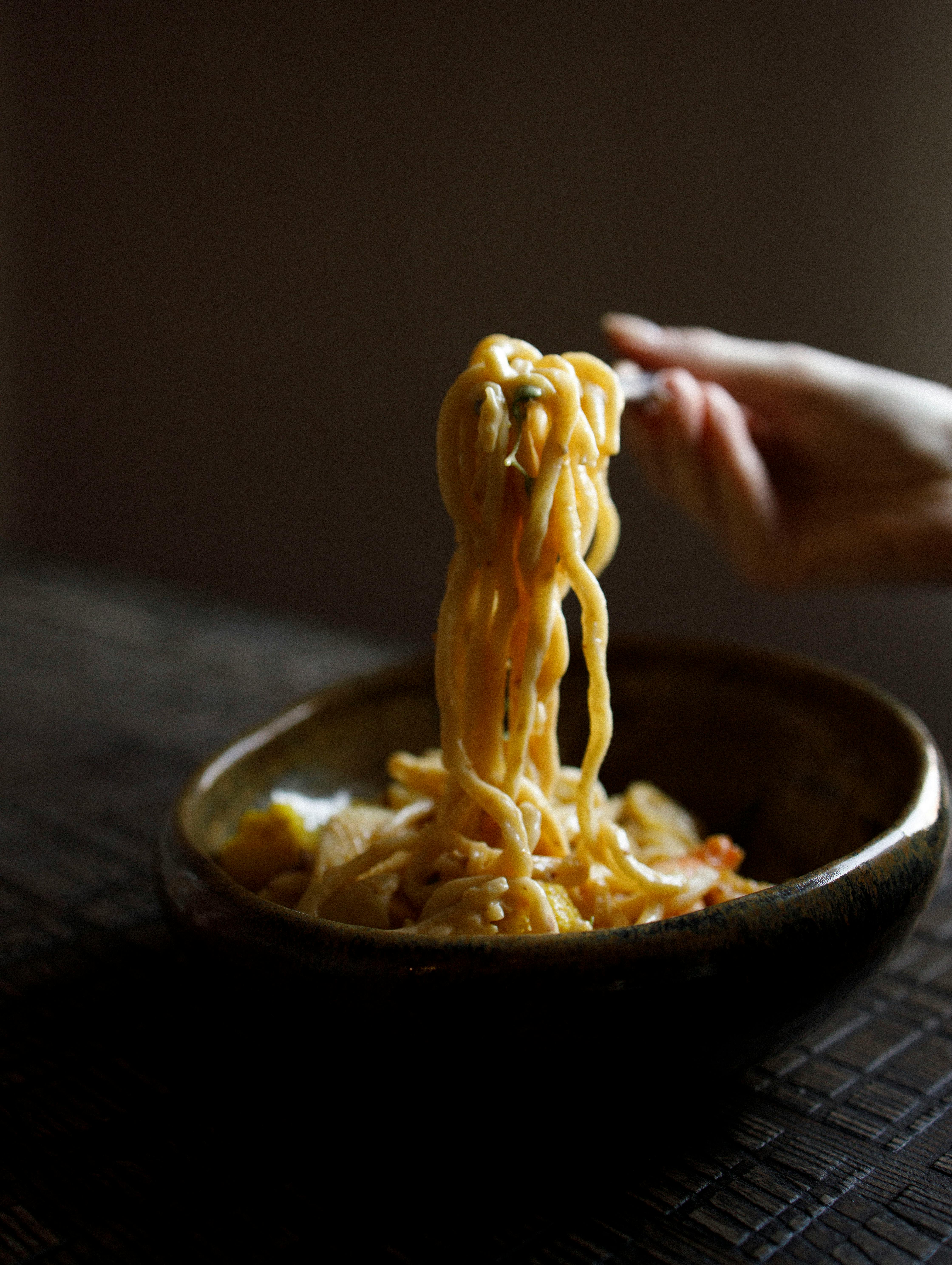
The Ultimate Comfort Food Blueprint
While everyone's specific comfort food varies based on culture and upbringing, most comfort foods share a distinct structural profile:
AttributeWhat It DoesCommon ExamplesHigh Softness/WarmthMimics physical warmth and is easy to consume when energy is low.Mashed potatoes, stews, porridgeCarbohydrate-DenseRapidly alters brain chemistry to boost mood.Pasta, fresh bread, pastriesFat & Salt/Sugar ComboTriggers maximum evolutionary palatability (taste satisfaction).Fried chicken, pizza, ice cream
The Takeaway: Give Yourself Some Grace
In a culture that is often obsessed with clean eating and dietary restriction, it is easy to feel guilty when we reach for comfort food. But understanding the why behind our cravings allows us to look at our relationship with food through a lens of self-compassion.
Eating a bowl of your mom's chicken noodle soup when you're feeling down isn't a failure of discipline. It’s a deeply human, beautifully complex response to stress—a way of self-soothing using our senses, our memories, and our history.
So the next time you need a little culinary comfort, enjoy every single bite. Your brain, your history, and your evolution are just doing their jobs.